
Capri Time


Home
Capri Boat Tours
Capri Walking Tours
Shore Excursions
Capri Villas
Capri Experience
Capri Transfers
Italy Tours
Tour Dates & Prices
Clients' Comments
About Us
Contact Us
Terms & Conditions
Online Reservations


IATA number:
19-595391


Amalfi Historical Details

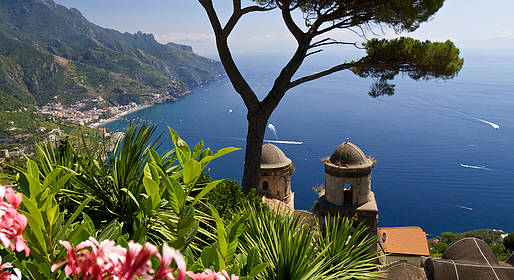
In 337 a.d., Roman patricians on their way to Constantinople were shipwrecked along so stunningly beautiful a coast that they understandably decided to stay marooned and let war and empire pass them by. Centuries hence, the 19th century Italian writer, Renato Fucini, would say: "When the inhabitants of Amalfi get to heaven on Judgment Day, it will be just like any other day for them."

For centuries thereafter-in the turmoil following the dissolution of the Western Roman Empire-Amalfi remained one of the small coastal enclaves ruled nominally by the Byzantine Empire. Finally, in 839, Amalfi was conquered by the Duchy of Benevento, itself a Longobard holdout against Byzantium. Benevento was badly in need of a port, and though there is little documentation of that period, the fact that Benevento bothered to take Amalfi at all may mean that the place had already developed into a port of some importance. 

Upon the death of the Duke, Amalfi freed itself from Benevento and went into business for itself. In 957, the head of Amalfi took the title of Duke, putting himself on an equal level with other rulers of the area. Little by little, the Amalfi fleet expanded and spread throughout the Mediterranean. Many places throughout the Mediterranean still have small churches dedicated to Saint Andrew, patron saint of Amalfi-churches built by Amalfi seafarers centuries ago. They established a strong presence in Antioch, and especially Constantinople, where they were the single greatest group of merchants in the commerce between East and West, taking an active political and economic role in the life of the Byzantine Empire. In Constantinople in the middle of the tenth century, there was an "Amalfi Quarter," replete with schools and stores. And in Jerusalem the Amalfitans founded the Order of the Knights, which later became the famous Order of Malta. 

The height of the Maritime Republic of Amalfi came at about the turn of the millennium, when Amalfi was a great exporter of wood and iron, and importer of spices, carpets, silk, and perfumes from the Orient, goods that found a market in the Papal States to the north and all the cities in the south of Italy. The cathedral of Amalfi is from that period. It was built in 1066 and still has the portals imported from Constantinople. Like the other maritime republics, Amalfi even coined its own money, the Tarì . Also, Amalfi was where the first Maritime Code, the so-called tavole amalfitane, was formulated, a code that regulated maritime trade in the Mediterranean from the 1000s to the 1500s and that served as a model for future maritime law. Here, they say, too, is where Flavio Gioia invented the compass-or at least improved upon the device borrowed from the Arabs.

The fortune of Amalfi changed dramatically for the worse in the 1100s. Three things happened. First, the powerful Normans, who would eventually take over all of southern Italy to found the Kingdom of Naples, took the city in 1131. With that, Amalfitan independence ceased. Second, the town was sacked by the maritime competition, Pisa, in 1135 and again in 1137. Third, Amalfi failed to participate in the first Crusade, leading further to its decline, and to the rise of competing maritime republics in the north of Italy. Somewhat later, in 1343, a powerful earthquake destroyed the port of Amalfi, administering a belated coup de grace to the once proud maritime power.

The current accessibility of Amalfi by vehicular traffic is due to the road-building enthusiasm of Ferdinand II of Bourbon, King of Naples, in the mid-nineteenth century, who opened a road all along the Sorrentine peninsula and over to the Amalfi coast.

Special thanks to Jeff Matthews for historical content!


<<BACK


TOUR DATES & PRICES

Custom Tours
CapriTime Tours will gladly design a tour of any length on Capri and throughout Italy around your specific interests and needs, whether for families, singles or couples of all ages, or groups of any size.   

Day Tours
If you are interested in private day tours, there are many options both on and off Capri.
Not only will we provide you with exceptional guide services, we can also make arrangements for private transportation, boat tours and special events.

Group Tours
All CapriTime Tours itineraries are designed for maximum flexibility and enjoyment.
To ensure individual attention, all scheduled group tours are limited to 8-16 guests, depending on the trip. We provide private group tour services to any size group.
Caprionline Network